Environmental occurrence
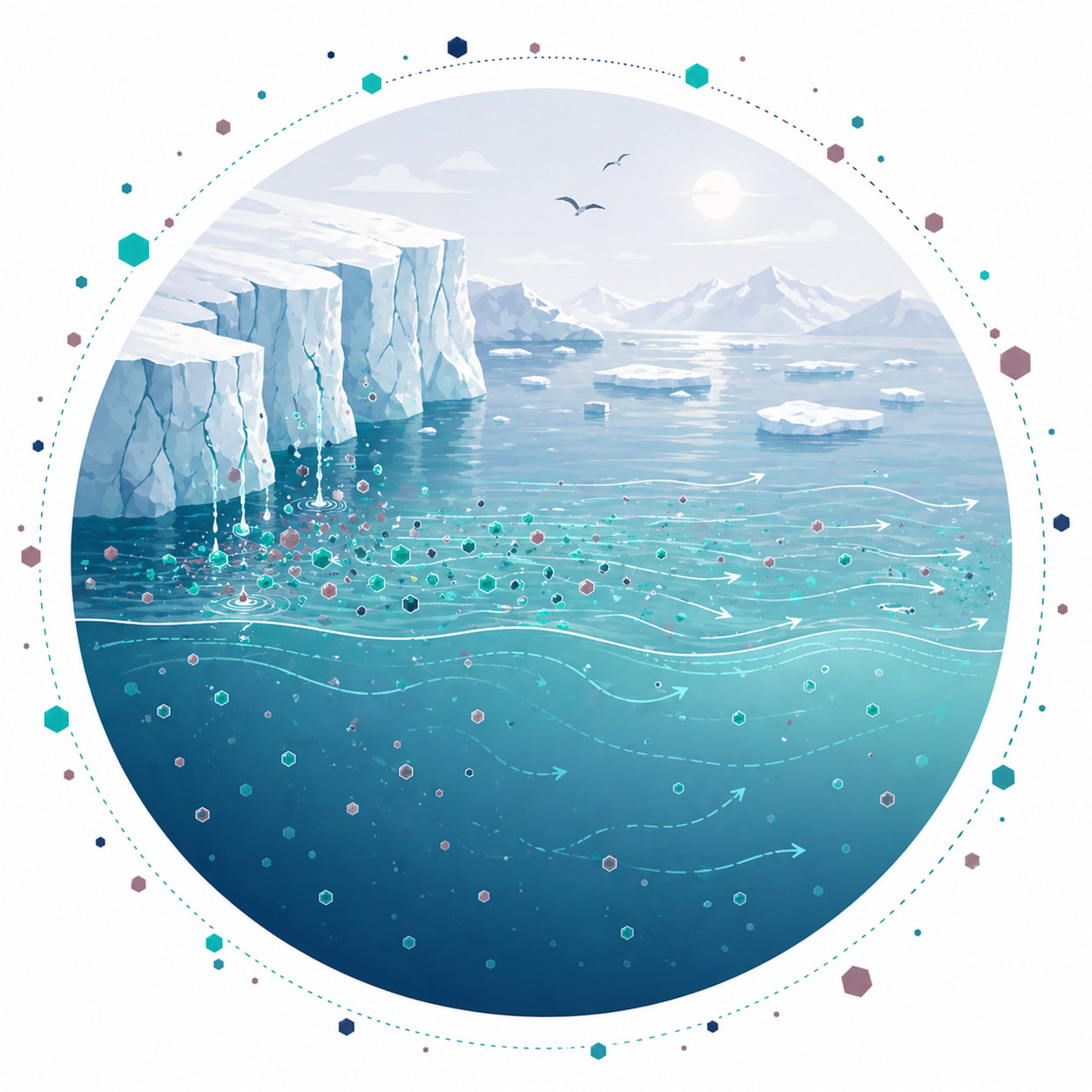
We study how PFAS are released, distributed and circulated in the Antarctic environment, especially under melting and climate change conditions.
How PFAS spread throughout the Antarctic environment
During the austral summer, when Antarctic snow and ice melt, the thaw releases PFAS that had been trapped for years or even decades. This reintroduces them into the Southern Ocean, where they can circulate once again.
This process increases contaminant concentrations and disperses them across the ocean surface, especially near coastal areas. The effect may be more noticeable at the sea surface, a very thin layer where many substances and microscopic organisms concentrate.
This research area studies how PFAS concentrations in water change, how they are distributed across space and time, and how climate change is intensifying this process.
Researchers